In the laboratory , substances and mixtures are used for a specific purpose , called chemicals (the term "reagent" is also often used). Chemicals are nothing unusual: in your everyday life you come across quite a few of them, for example different solvents for paints, household cleaning products, vinegar, flower fertilizers, as well as many other substances. As some chemicals can be dangerous to both the user and the environment, hazard symbols are used to emphasize this.
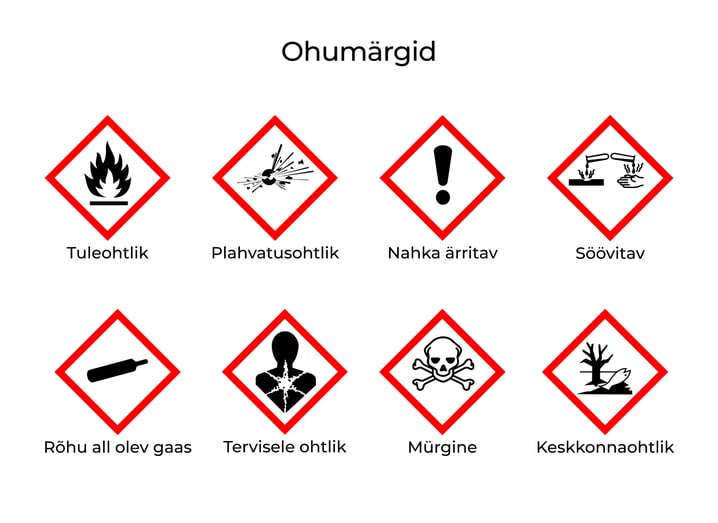
Danger signs provide the user with information on how to safely handle the reagent. Here you can find pictures of the most common danger signs. Note the explanatory names under the signs!
In the cleaning cupboard at home, there is window washing liquid, dishwashing liquid and floor washing liquid, as well as liquid for cleaning sewage stations.
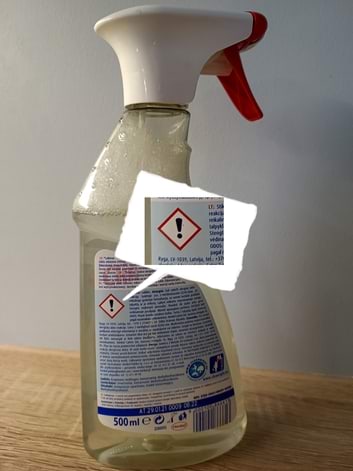
Different danger signs can be found on each bottle, all of which provide information to the user.
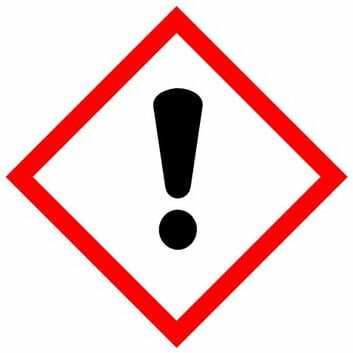
For example, a glass cleaner bottle has this sign:
|
|
|---|---|
What information do you get here?
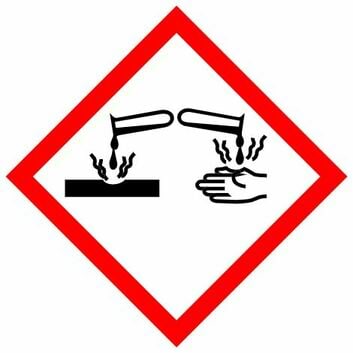
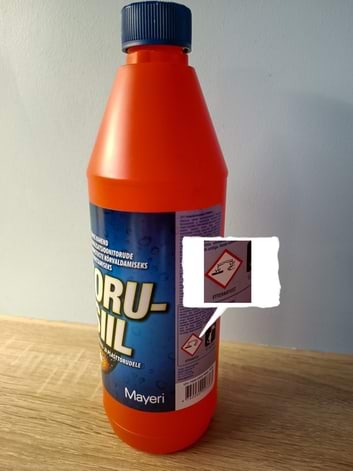
On the bottle of the pipe cleaner Torusiil, however, we find this sign:
|
|
|---|---|
What does this sign warn you about?
Now imagine a situation where someone has poured window cleaner into a bottle of mineral water instead. Without any inscription on the bottle of mineral water, it looks to everyone else in the family just like regular water with no gas left in it. Yes, the glass cleaner wouldn't cause much health damage if you drank it, but if Torusil, for example, was poured into the mineral water bottle? There are several cases that have also reached the media, where due to people's unwillingness (and in the meantime also ignorance), other family members have drunk a liquid that seemed safe to them at first, but very quickly realized that it was some dangerous chemical. In this case, the ambulance already helps the victim.