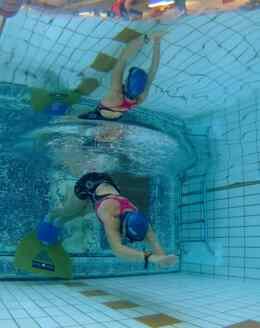
There are media that are transparent to light but are optically denser. Common examples here are glass and water.
When light propagates into or out of an optically denser medium, it is called refraction. Refraction is described by the angle of incidence and the angle of refraction. The angle of incidence is formed between the incident beam and the normal to the refracting surface. The angle of refraction is formed between the refracted (passed through the separation surface of two media) ray and the normal to the refracting surface. In general, light changes its direction when it is refracted, except when the ray falls on the refracting surface perpendicular to it.
- When light moves from an optically sparser medium to an optically denser medium, the angle of incidence is greater than the angle of refraction.
- When light moves from an optically denser medium to an optically thinner one, the angle of incidence is smaller than the angle of refraction.
- If light moves from an optically denser medium to an optically sparser medium, total internal reflection of light is possible, where the light is completely reflected back to the optically denser medium. This happens at high angles of incidence.
When refracted light enters the observer's eye, he sees objects in the direction of the extensions of the light rays that have reached his eye.
We recommend starting with an experiment that, despite its simplicity, will make students raise their eyebrows for a moment - if the light reflected from an object spreads through a piece of glass that is thick enough, then when the piece of glass is turned, the object seems to change its position. After this experience, we will explain why this happens.
In the next module, the basic situations that occur when light is refracted are explained and tested in an experiment.
Finally, we will analyze two intriguing phenomena, for the explanation of which it is necessary to know the basic laws of light refraction.
The current curriculum does not mention full introspection. We will still cover it in this lesson material.
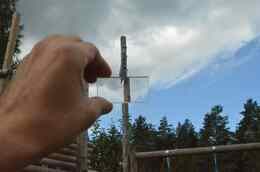
How to target?
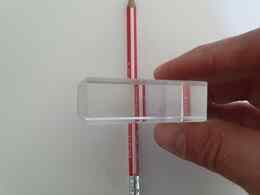
A glass cuboid breaks a pencil
Ka võrdkülgse prismaga annab sarnase ideega katset teha. Siin on pliiatsi asukoha ja selle näiva asukoha erinevus suurem, nii et meil tuleb ka veidi otsida. Teeme ka joonise.
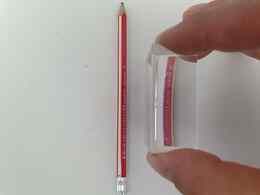
A pencil through an equilateral prism
Kõigepealt teooriaslaid.
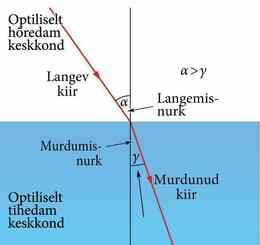
How we describe the refraction of light
Valguse murdumine klaasi sisenemisel.
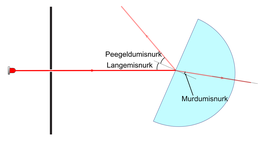
Light refracts in glass
Valguse murdumine klaasist väljumisel.
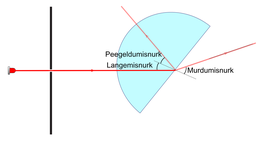
Light bounces off the glass
Täielik sisepeegeldumine.
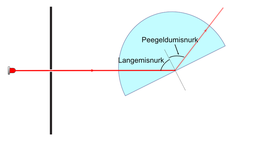
Total internal reflection
Miks läbi risttahuka paistva pliiatsi osa näib olevat nihkunud.
Miks läbi prisma vaadates näib pliiats olevat teises kohas.
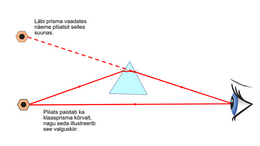
Light through a prism
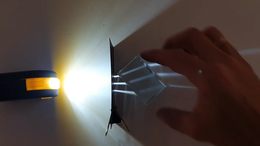
Light through the glass cuboid
Kaks olukorda, mille põhjuseks on valguse murdumine ...
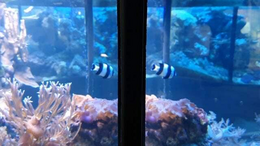
How many clownfish are there in the aquarium?
... ja täielik sisepeegeldumine.